
Face Search Privacy Guide Before You Upload a Photo
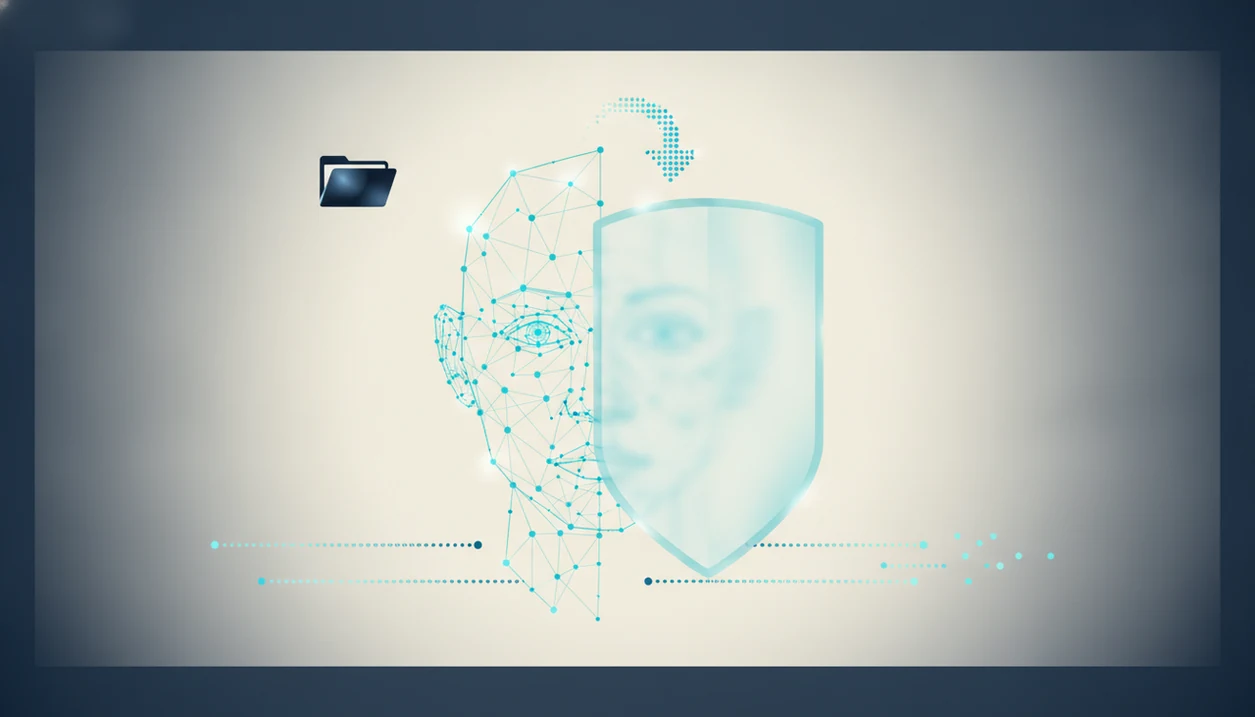
Face search privacy means checking what happens to your photo and faceprint before you upload: storage, retention, training use, sharing, deletion, and biometric-data controls. Treat every upload as sensitive because a face can identify you across sites, profiles, and databases.
> Face Search App is a face search app that explains how to find people by photo, compare reverse face search tools, and check scam photos for everyday users.
- A face photo and the face template derived from it can both be biometric data, but the template is often the more persistent privacy risk.
- Before uploading, check whether the service stores uploads, creates faceprints, trains models, shares data, or offers real deletion.
- Avoid uploading other people’s photos without a legitimate, safety-focused reason, and never use face search for stalking, doxxing, harassment, or identity exposure.
Face search privacy at a glance before any upload
Face search privacy starts with one upload decision: what you give the tool, what it may create from your face, and what control you can get back afterward. A no-name upload is not automatically anonymous, because the face itself can be an identifier.
| Privacy question | Why it matters | Safer choice |
|---|---|---|
| Does it store uploads? | The original image may reveal faces, rooms, uniforms, or location clues. | Prefer temporary processing or clear short retention. |
| Does it create face templates? | Templates can persist after the visible photo is gone. | Look for template deletion, not only image deletion. |
| How long is retention? | “Until account closure” can mean years. | Choose fixed, stated retention periods. |
| Is training allowed? | Uploads may improve models beyond your search. | Require separate opt-in consent. |
| Is data shared? | Vendors, analytics, or partners expand exposure. | Avoid silent third-party sharing. |
| Can you delete it? | Deletion should cover uploads, templates, and logs where possible. | Test account controls before uploading. |
We pause at the permissions screen first. Camera roll access is not a small ask.
What biometric data face search privacy actually covers
Face search privacy covers both the face image a person uploads and the face template, or faceprint, a system may create to compare that face against other images. Laws vary by country, state, sector, and purpose, so this is privacy guidance, not legal advice.
Photo uploads versus face templates
The uploaded photo is the file you can see. It may include the face, background, metadata, and other people in the frame. The face template is different. It is a mathematical representation used for matching, often called an embedding in technical systems.
Templates can be harder to inspect, export, understand, or delete. That is why biometric data face search controls matter in everyday tasks such as scam-photo checks, reverse face search, and social profile lookup. A password can be changed after a leak. Your face cannot.
For everyday safety checks, a cropped, context-light image is often safer than a full original photo because it reduces extra people, places, and metadata exposed during upload.
Five face search privacy risks readers should know
Five face search privacy risks matter before any upload, especially when the photo belongs to someone else. Each risk can affect safety, not just convenience.
- Biometric identification risk: A face can identify someone across databases, profiles, and public-photo collections.
- Retention risk: Services may log uploads or keep faceprints longer than users expect, especially through account history, backups, or provider logs.
- Training risk: Photos or derived templates may be used to train or improve models without clear informed consent.
- Linking risk: Face data can be connected with social profiles, device data, location clues, reposts, or other identity signals.
- Bias and false-match risk: NIST found some algorithms were 10 to 100 times more likely to produce false positives for Asian and African American faces than for Caucasian faces source. Buolamwini and Gebru also reported much higher error rates for darker-skinned females in commercial facial-analysis systems in the Gender Shades study source.
An uncertain match with a question mark is a warning sign, not a result to act on. Corroborate before acting.
How face search upload privacy works behind the scenes
Face search upload privacy depends on the whole data flow, not only the moment you press upload. A typical system receives the image, preprocesses it, detects a face, extracts features, creates a face template, compares that template against a database, then ranks possible matches.
The face search data flow
Feature extraction turns visible facial patterns into numbers that a system can compare. In plain language, the tool is not “seeing” identity the way a person does. It is comparing a faceprint against other stored or indexed faceprints.
A practical guide to finding people by photo, reverse face search, social profile lookup, and scam-photo checks should deliver cautious source trails, not identity verdicts.
Where face data can persist
The original image, cropped face, metadata, search logs, and template may be stored separately. Retention points can include temporary caches, account history, provider logs, backups, analytics systems, and model-training pipelines.
Encryption helps in transit and storage, but it does not fix broad permissions or long retention. Privacy-preserving approaches include strict minimization, short retention, local processing, differential privacy, and real deletion workflows. For privacy-preserving approaches, NIST describes differential privacy as a way to add calibrated noise so individual records are harder to reconstruct, though it does not solve broad retention, sharing, or consent problems source.
Face search privacy checklist for safer uploads
Use the Safer Face Upload Checklist before putting any face into a search tool. It is meant for narrow safety uses, such as checking a suspected scam photo, not for exposing private people.
- Retention check: Look for separate rules on upload retention, template retention, logs, and backups.
- Training check: Confirm whether uploads or templates can train, tune, or improve models.
- Human review check: See whether employees or contractors may inspect images.
- Sharing check: Review vendors, analytics partners, affiliates, advertisers, and law-enforcement request language.
- Deletion check: Verify whether deletion covers uploaded images, templates, account history, and opt-out settings.
- Image minimization check: Crop unnecessary people, remove location metadata, avoid children, and avoid private rooms or documents.
- Consent check: Do not upload another person’s image unless you have consent or a narrow safety reason.
If the search relates to fraud or safety, save a screenshot with the date visible before the policy or result page changes. The broader consent issues are covered in consent and ethical photo lookup.
Face search privacy myths about anonymity and deletion
Face search privacy myths usually start with a comforting assumption: “It was just one upload.” In practice, the policy, system design, and database connections decide what happens next.
| Myth | Reality |
|---|---|
| Uploading once means the company cannot keep or reuse the image. | Retention and reuse depend on the provider’s policy, account settings, logs, and training permissions. |
| Face search is anonymous if you do not type a name. | Biometric data can identify and link a person even without a typed name. |
| Only police facial recognition creates privacy risk. | Commercial face search apps can also create searchable identity infrastructure. |
| Bias is only an accuracy issue. | False matches and uneven performance can create privacy, safety, and reputational harms. |
The Georgetown Law Center on Privacy and Technology estimated in 2016 that at least 117 million American adults were included in law-enforcement face recognition networks source. That is context, not the whole risk. Commercial systems matter too.
Biometric data face search controls worth demanding
Trustworthy biometric data face search controls should be specific, visible before upload, and separate from general website terms. Look for clear notice, specific consent for biometric processing, separate consent for model training, strict retention limits, and no silent third-party resale.
Consent and training controls
Good consent is not a buried sentence beside an upload button. It should explain whether the service creates templates, whether humans may review results, whether searches are logged, and whether uploaded images improve the system. Tools like Face Search App, Google Lens, TinEye, and other search services should be compared on these privacy tradeoffs, not just match quality.
Deletion and opt-out controls
Security controls should include encryption, access controls, audit logs, limited employee access, and breach notification. User rights should include access, correction where relevant, deletion of uploaded images, deletion of templates, opt-out of training, export, and account closure.
Deletion should address backups, derived templates, logs, and model-training use where technically and legally possible. No provider can guarantee removal from the open web or every third-party site.
What face search privacy does not cover
Privacy-aware face search guidance is not permission to identify strangers, expose private identities, harass people, or bypass consent. A public photo is not the same as consent to biometric search or profile linking.
This page focuses on everyday safety uses: checking scam photos, verifying suspicious profiles, and understanding upload risk. It does not provide instructions for stalking, doxxing, deep username investigations, or evading platform rules. If a search starts feeling like pressure to message a stranger, stop and document only the safety concern.
Public, government, workplace, school, and law-enforcement facial recognition raise additional legal and ethical issues. A 2022 Brookings survey found over 60% of Americans supported strict limits on government use of face recognition, with higher concern about public-space surveillance than unlocked phone use source.
Questions about whether a specific use is allowed belong with is face search legal, especially when workplaces, schools, minors, or investigations are involved.
When to get help before using face search
Get help before using face search when the situation involves immediate danger, legal exposure, minors, workplaces, schools, or a private person who has not consented. A match page is not proof, and acting on it too quickly can put people at risk.
- Call emergency services first if the image or profile is tied to an immediate threat, physical danger, extortion in progress, or a missing-person emergency.
- Report impersonation, romance scams, harassment, or non-consensual intimate images through the platform’s safety and abuse tools instead of trying to identify the person yourself.
- Ask a lawyer before searching employees, students, minors, suspects, witnesses, tenants, dates, neighbors, or any private individual where rights, consent, or discrimination concerns may apply.
- Preserve the evidence you already have: screenshots, profile URLs, timestamps, payment handles, usernames, messages, and the date you captured them.
- Avoid confronting, accusing, posting, or messaging someone based only on a face-search match. Treat the result as a lead that needs independent confirmation, not a safe basis for action.
Limitations
Face search privacy controls reduce risk, but they do not erase it. If the upload involves threats, extortion, minors, workplace or school surveillance, law enforcement, or possible legal claims, pause and contact a lawyer, platform safety team, local authority, or emergency service as appropriate before running more searches. Treat every upload as a sensitive disclosure.
- No face search app can fully guarantee privacy once biometric data is uploaded.
- Breaches, insider misuse, compelled disclosure, weak vendors, and policy changes can still create exposure.
- Encryption and differential privacy reduce certain risks, but they do not fix broad retention, sharing, or model-training permissions.
- Deletion may not fully purge backups, logs, derived templates, or influence on trained models.
- Face recognition accuracy gaps and demographic bias can create false matches and unequal harms.
- Legal protections vary widely by country, state, sector, and purpose.
- Users cannot force removal from every third-party database or copied result once data has spread.
- A polished match page can still be wrong if the source trail is weak, old, cropped, or copied.
For match-risk interpretation, face search accuracy and AI face search limitations explain why a visual match is a possible match, not proof.
FAQ
What is face search privacy?
Face search privacy means understanding what happens to a face photo and faceprint after upload, including storage, retention, sharing, training use, and deletion. It also covers whether you can control or remove biometric data.
Are face photos biometric data?
A face photo can be biometric data when it is used to identify or verify a person. A derived face template is often more sensitive because it is designed for matching.
Can face search store my photo?
Yes, a face search service can store your photo if its policy, logs, backups, or account settings allow it. Check retention terms before uploading.
Can face search keep faceprints?
Yes, some services may create and retain faceprints even if the visible uploaded image is removed. Deletion should specifically mention templates or biometric identifiers.
Is face search anonymous?
Face search is not automatically anonymous just because you do not type a name. A face can identify or link a person across searchable sources.
Can uploads train AI models?
Uploads may be used to train or improve models if the provider’s terms allow it. Safer services require explicit consent and an opt-out for training.
Can I delete face search data?
Deletion should cover uploaded images, templates, logs, account history, and training opt-outs where possible. Backups, audit logs, or model effects may remain.
Can someone reverse search my face?
Yes, someone may be able to reverse search your face if your images exist in searchable public sources or private databases. They should not use that ability for stalking, doxxing, harassment, or non-consensual exposure.
Is face recognition on phones safer?
On-device phone unlocking is generally different from cloud-based face search because the biometric template may stay on the device. Cloud uploads create extra retention, sharing, and account-history risks.
What makes face search risky?
Face search is risky because it can involve biometric identification, long retention, data linking, third-party sharing, bias, and misuse. Face Search App treats matches as source trails to review, not proof of identity.